Material
Turkish Cotton: The Material Behind the Peshtemal
5 August 2026
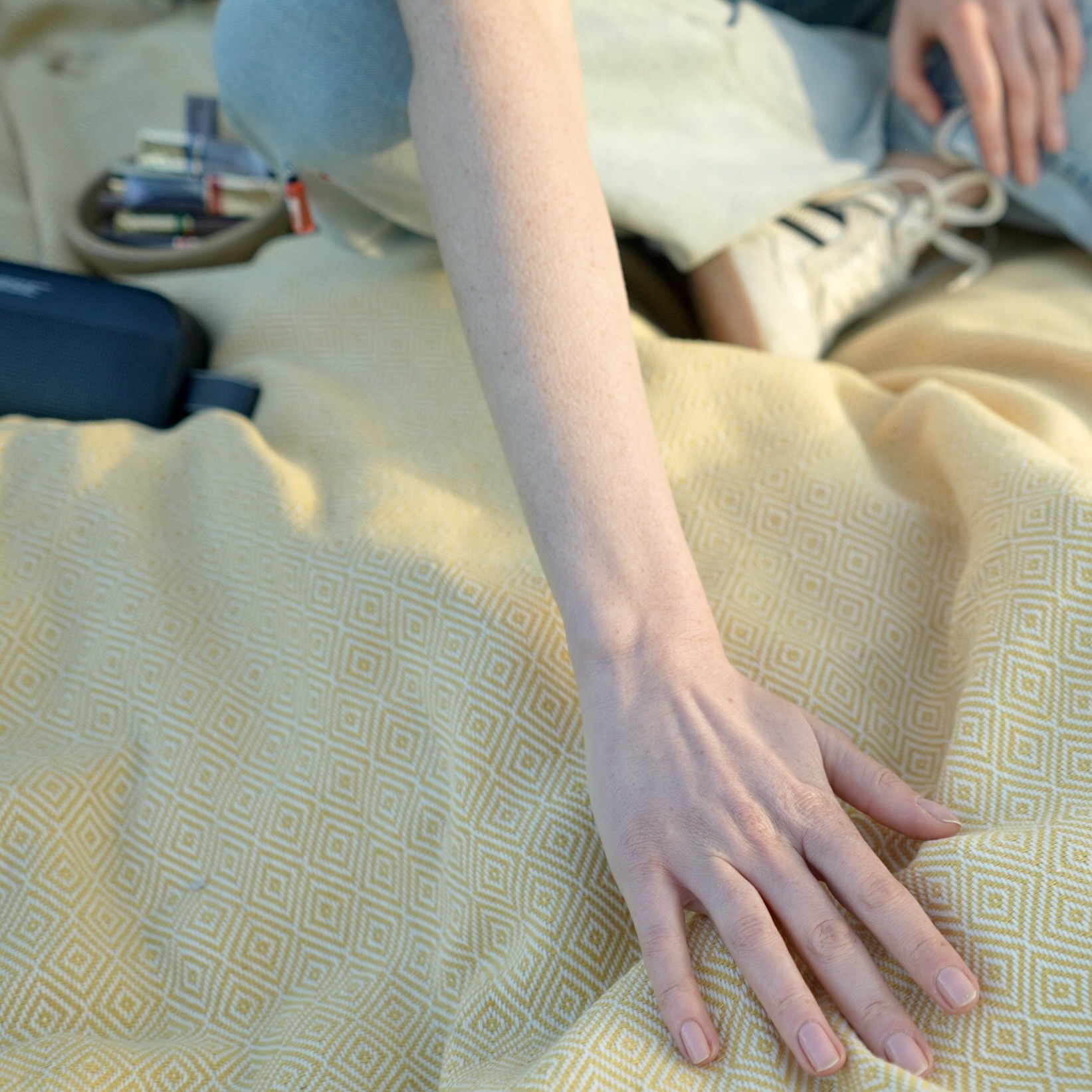
The label says “100% cotton” — but cotton is not simply cotton. Turkish cotton has counted among the world’s most prized for generations, for tangible reasons you can feel in every Lucidus towel.
Long fibres, strong yarns
The climate of western Anatolia and the Aegean produces cotton with comparatively long fibres. Longer fibres spin into smoother, stronger yarns — with fewer stray fibre ends. The result: yarns that lint less, last longer and feel cooler and smoother on the skin.
Ring-spun, not rushed
Our yarns are ring-spun — a slower process that aligns the fibres in parallel and twists them firmly. Ring-spun yarn is why a good peshtemal can do both: be fine and light, yet stand up to commercial wash cycles. In the weave we combine different yarn weights for framework and texture — giving the towel stability and its soft drape at once.
Yarn dyeing: colour in the fibre
Our yarns are dyed before weaving, not as a finished cloth. The colour sits in the fibre rather than on it — surviving 40 °C washes, sun and salt water far better. And only yarn dyeing makes weave patterns like Herringbone and Diamond possible, where two yarn tones draw the pattern.
Why the towel improves with age
Cotton fibres open a little further with every wash — the towel gains volume, softness and absorbency. With long-staple, ring-spun cotton this happens without the weave slackening. A peshtemal of Turkish cotton is a textile you break in like good shoes: the best towel is the one you’ve used for years.
Where these yarns become towels is told in the story of Adrianople and Edirne — and what becomes of them is in the Colour World.